Danielle Brown
​BLOG
  • Home
    • About Danielle
    • In The News
  • Speaking
  • Inclusion
    • You Can't Say That!
    • Rise! Without Being Exceptional
    • Disability Confidence
  • Schools
  • Books
    • Free Resource Packs for Schools
  • Blog
  • Contact

7/12/2025

Why Disabled People Are Often Underestimated

0 Comments

Read Now
 
There's a quiet behaviour that many disabled people experience that goes unnoticed by those around us. It's called competence drift, and it happens when people lower their expectations of what we can do, not because of anything we have shown, but because they see disability before ability.
​

WHAT COMPETENCE DRIFT LOOKS LIKE

Picture
It can be someone speaking more slowly when communicating with a disabled person.

It can be taking a task away from a disabled person, even though they were already doing it.

It can be a decision being made on behalf of somebody because they assume that their disability makes it too difficult.

Each of these examples looks minor in isolation, but they accumulate. Over time, the pattern becomes obvious. Disabled people are not being measured by their actions or experience, but by someone else’s assumptions.
​

Intent is not the issue

Most of the time, people are genuinely trying to help so the difficulty lies not in the intent, but in the belief underneath it.

Disability has long been linked with inability in people’s minds. The word disabled means 'not functioning properly', which is fine if we're talking about a lift or a toilet. The problem arises when this association gets absorbed into our understanding of people because it shapes how they respond.

I'm not calling for an overhaul of language here - we're stuck with 'disabled' and 'disability' and we're going to have to learn how to own it - we just all need to be aware of how our subconscious understanding of these words can shift our behaviours.
​

When Assumptions take Over

Moments where disability is noticed first and ability second are not rare. They creep into everyday situations in ways that are easy to overlook. 

I've been called inspirational for taking the train, as if basic travel becomes extraordinary the moment disability is involved.

People assume I cannot walk up steps, and have already mapped out a much longer route for me before I've stood up.

I've even had my own backpack taken from me without being asked, because a stranger was convinced he knew what I needed more than I did.

These are a few, innocuous examples that happen in the 
day-to-day, and none of them come from a place of harm. However, these assumptions influences decisions in the workplaces, public places and in the smallest interactions that make up daily life. Bit by bit, they lower expectations and widen the gap between perception and reality.

It helps to remember that none of us created the assumptions we are trying to undo. They sit on generations of social conditioning, healthcare narratives and workplace norms that have taught people to respond to disability with caution before confidence. That history will not dissolve in a single training session or a single conversation. People will get things wrong, overthink and hesitate.
​
The goal is not flawless behaviour, but to build an environment where disabled people are not battling assumptions before they even begin. Awareness, curiosity and a willingness to course-correct are far more useful than perfection.
​

Creating a space for ability

Reducing competence drift does not require dramatic change. It comes down to three consistent behaviours.
  1. Ask before acting. A simple “Do you want a hand?” or “What works best for you?” prevents assumptions from taking over and gives the disabled person control of the interaction.
  2. Listen properly to the answer. If someone says they are fine, believe them. If they say they need something different, take that at face value.
  3. Create space for capability. That means stepping back enough for disabled people to show what they can do, rather than filling in the gaps with guesswork.

These three actions sound small, but together they shift the focus from assumption to respect and allow competence to be seen rather than quietly limited.

Share

0 Comments

7/11/2018

Barriers Are Meant To Be Broken...

5 Comments

Read Now
 
​Have you ever had your life turned upside down? Things are going great, then something gets flung your way that you never expected?
 
Yep, that happened to me… 
 
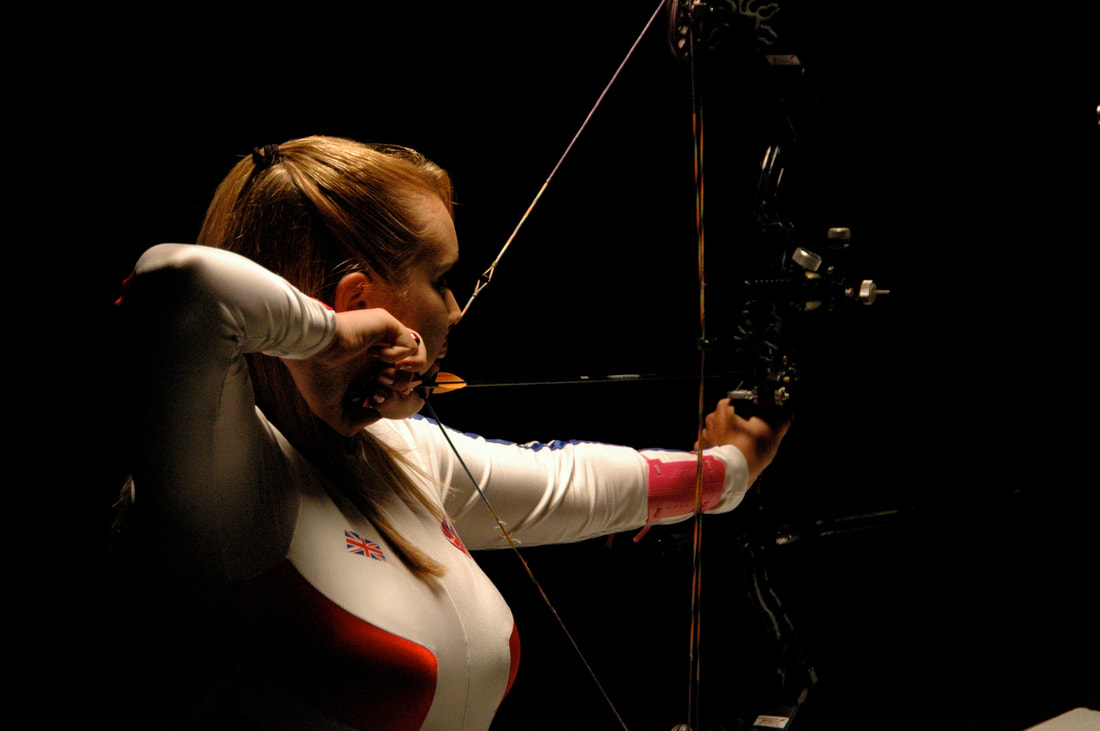
I had this awesome sports career that just got better and better. It was a bit of a whirlwind really. I started archery on my fifteenth birthday, made the Great Britain team three years later and jumped straight in as World Number 1. Year on year I outdid myself. World records, world titles, world firsts. I pushed the boundaries of my potential and redefined what I thought I was capable of.
Picture
Whenever I am asked about the important factors that lead to success in sport it can unreservedly be summed up in one word: passion. 
 
If you love what you do then you’re going to want to put in however much time and effort it takes to achieve scary, big goals. Passion is the thing that inspires you to keep striving for better. It ensures you keep learning and evolving, and think up creative strategies to drive performance. It’s your motivation to find a way around the obstacles that inevitably crop up and stops you from walking away when things get impossibly tough.
 
And I was passionate about my sport. I poured my heart and soul into it. Archery had changed my life in such a profound way, empowering me to live life on my terms when I became disabled. This was my purpose, my reason for getting up in the morning. And I was good at it.
 
But then something happened that I couldn’t prepare for. The International Paralympic Committee changed the rules around classification. Whilst I’d always passed this with flying colours, under the new rules it was decided that my disability did not affect my ability enough. And that was it. I was no longer allowed to compete as a Paralympian. Overnight I lost everything. 
 
My sport. My purpose. My way of life. My identity.
 
My life came crashing down and I quickly moved from shock to disbelief. The classifiers saw what I wanted the outside world to see and didn’t understand just how limiting my condition was, so I contested it. I appealed and protested, and I got nowhere. Failing again was almost worse than the first time. I felt angry, frustrated and alone. 
 
Lost. 
 
But life moves forward whether you want it to or not. My only option was to adapt to the situation. I could do nothing about the classification decision, but I could control my response to it. Instead of focusing on all the things I had lost, I focused on what I had left. I needed to find a new purpose, one that I was just as passionate about as my sport. 
 
And that’s exactly what I did. I reinvented myself, set up a speaking, training and coaching business – and I absolutely LOVE what I do now.
 
Life doesn’t always go to plan, but we are all capable of breaking through barriers. When you’re thrown a curveball here are three things that you can do: 
 

1. Perspective

When stuff goes wrong it’s usually accompanied by an emotional response, making us feel pretty rubbish about ourselves and the situation. Emotions are healthy and we don’t want to switch them off, but we don’t want them to interfere in any decision-making processes either. When we’re thinking emotionally, we aren’t always able to see things with clarity. Putting things into perspective allows us to respond better. Acknowledging your emotions and practicing self-compassion is important, then take some time to reflect on the situation and the reality of it. 
​

2. Focus

When we hit barriers our focus is often drawn to the ‘why?’ We want to find a way to rationalise the experience and understand how it happened to us. However, this keeps us stuck in the past. There might be a few important lessons to be learned, but in order to move forwards we need to shift our focus away from what happened to what we’re going to do about it. It’s much more impactful to think about solutions rather than trying to explain away the problem.
​

3. Choose the right response

We always have a choice, even when we’re faced with adversity. It’s not what happens to us, but how we choose to respond to that situation. We can give up or we can pick ourselves up. Taking ownership of the situation and focusing on the things you can do something about puts the ball back in your court. 
 
Pushing through adversity isn’t easy. It can be a very lonely place, but remember you are never alone. Your support network is there to help, offering encouragement and guidance. They can help you manage your emotions, act as a sounding board to bounce ideas off and hold you accountable for actions you decide to take. I can’t begin to explain how many people have helped me (and still do!) through the adversities I’ve faced in my life, giving me a fresh perspective and allowing me to tackle challenges better.
​

Categories

All
Adversity
Ambassador
Archery
Athlete
Authenticity
Barriers
Break Through Barriers
Building Resilience
Challenge
Charity
Choosing The Right Response
Disability
Diversity
Diversity And Inclusion
Empower
Focus
Gender Equality
Habits
Identity
Inspire
International Women's Day
Mindset
Mintridge
Open Water Swim
Performance
Perspective
Resilience
Success Habits
Success Mindset
Swimming
Unlock Potential
Women Leadership

Share

5 Comments
Details

    Categories

    All
    Adversity
    Ambassador
    Archery
    Athlete
    Authenticity
    Barriers
    Be The Best You Can Be
    Book
    Break Through Barriers
    Building Resilience
    Challenge
    Charity
    Child Development
    Choosing The Right Response
    Disability
    Diversity
    Diversity And Inclusion
    Empower
    Entrepreneur
    Face Fears
    Fear
    Focus
    Football
    Gender Equality
    Girls In Sport
    Habits
    Identity
    Inspire
    International Women's Day
    Mindset
    Mintridge
    Open Water Swim
    Open Water Swimming
    Parenting
    Performance
    Perspective
    Resilience
    Self Development
    Shoot For The Stars
    Success Habits
    Success Mindset
    Support Team
    Swimming
    Unlock Potential
    Women In Sport
    Women Leadership

    RSS Feed

Contact Danielle at [email protected]
​ 
  • Home
    • About Danielle
    • In The News
  • Speaking
  • Inclusion
    • You Can't Say That!
    • Rise! Without Being Exceptional
    • Disability Confidence
  • Schools
  • Books
    • Free Resource Packs for Schools
  • Blog
  • Contact